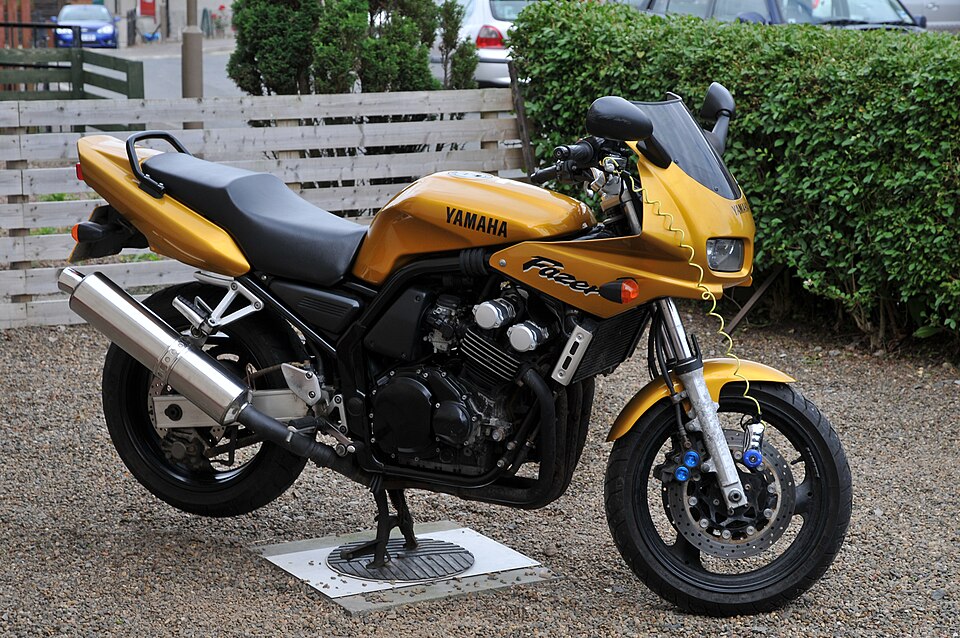
YAMAHA FZS600

The pass rate is the MOT first-time pass: a roadworthiness check of the items an MOT covers (brakes, lights, tyres, steering, structure, emissions), not a full mechanical inspection of engine or gearbox internals. It is a reliability signal, not a complete measure of mechanical reliability. What this measures.
“vs expected” adjusts for age, mileage and test class, so a cherished classic and a hard-used commuter are compared fairly. How this works.
Pass rate over time
The FZS600's first-time pass rate has fallen 2.0 points since 2005, 86.0% to 84.0%.
Pass rate by mileage
A low-mileage FZS600 passes first time 89.6% of the time; by 50k that's 74.7%.
First-time pass rate by odometer reading at test, 10,000-mile bands for this model. Mileage is the strongest reliability signal. See the full curve.
What fails on a FZS600
| Component group | Share of defects | Defects | % of defects | vs all bikes |
|---|---|---|---|---|
| brakes |
|
8,935 | 31.5 | 1.1× |
| lighting and signalling |
|
4,773 | 16.8 | 0.6× |
| tyres and wheels |
|
3,784 | 13.3 | 1.2× |
| steering and suspension |
|
3,316 | 11.7 | 0.7× |
| lamps and reflectors |
|
1,800 | 6.3 | 0.6× |
| fuel and exhaust |
|
1,681 | 5.9 | 1.4× |
| drive system |
|
1,452 | 5.1 | 1.2× |
| structure and attachments |
|
917 | 3.2 | 0.8× |
| body and structure |
|
893 | 3.1 | 1.2× |
| suspension |
|
855 | 3 | 0.7× |
Defects recorded against failed normal tests, 2005–2025, grouped by DVSA inspection section. One test can record multiple defects. "vs all bikes" is how often this model's tests record a defect in the group, as a multiple of the all-bike rate.
How rivals compare
On first-time pass rate the FZS600 beats 3 of its 4 closest rivals (KAWASAKI ZX-6R, SUZUKI GSF600, SUZUKI SV650S).
Rivals share this bike's type and sit within ±30% of its engine capacity, ≥ 5,000 tests. Card colour = better/worse first-time pass rate than the FZS600.
Compare with any bike
More YAMAHA models
Pass rate by registration year
Best year to buy used: 2003 (86.1% pass). Weakest: 2004 (77.6%).
First-time pass rate by the year each bike was first registered (cohorts with ≥ 50 tests). Older cohorts are survivors: the worst examples have already left the road, which tends to lift the earliest years.
YAMAHA FZS600 FAQ
Is the YAMAHA FZS600 reliable?
The YAMAHA FZS600 is less reliable than average for its class: 82.6% of its 136,558 MOT tests (2005–2025) passed first time, against a class average of 84.9%. That ranks it #3052 of 5428 models.
What does a FZS600 fail its MOT on most?
brakes — 31% of all defects recorded against failed FZS600 tests.
What is the best year of FZS600 to buy used?
By first-time pass rate, 2003-registered examples do best (86.1%) and 2006 worst (77.6%). Condition and history still trump the year.
How many miles will a FZS600 last?
The median FZS600 shows 21,612 miles at test, and examples around 50k miles still pass 74.7% of the time — mileage alone rarely kills one.
Embed this bike
Free to embed on your site, blog or forum — a live Yamaha FZS600 reliability card that stays up to date and links back here. More on the free API page.